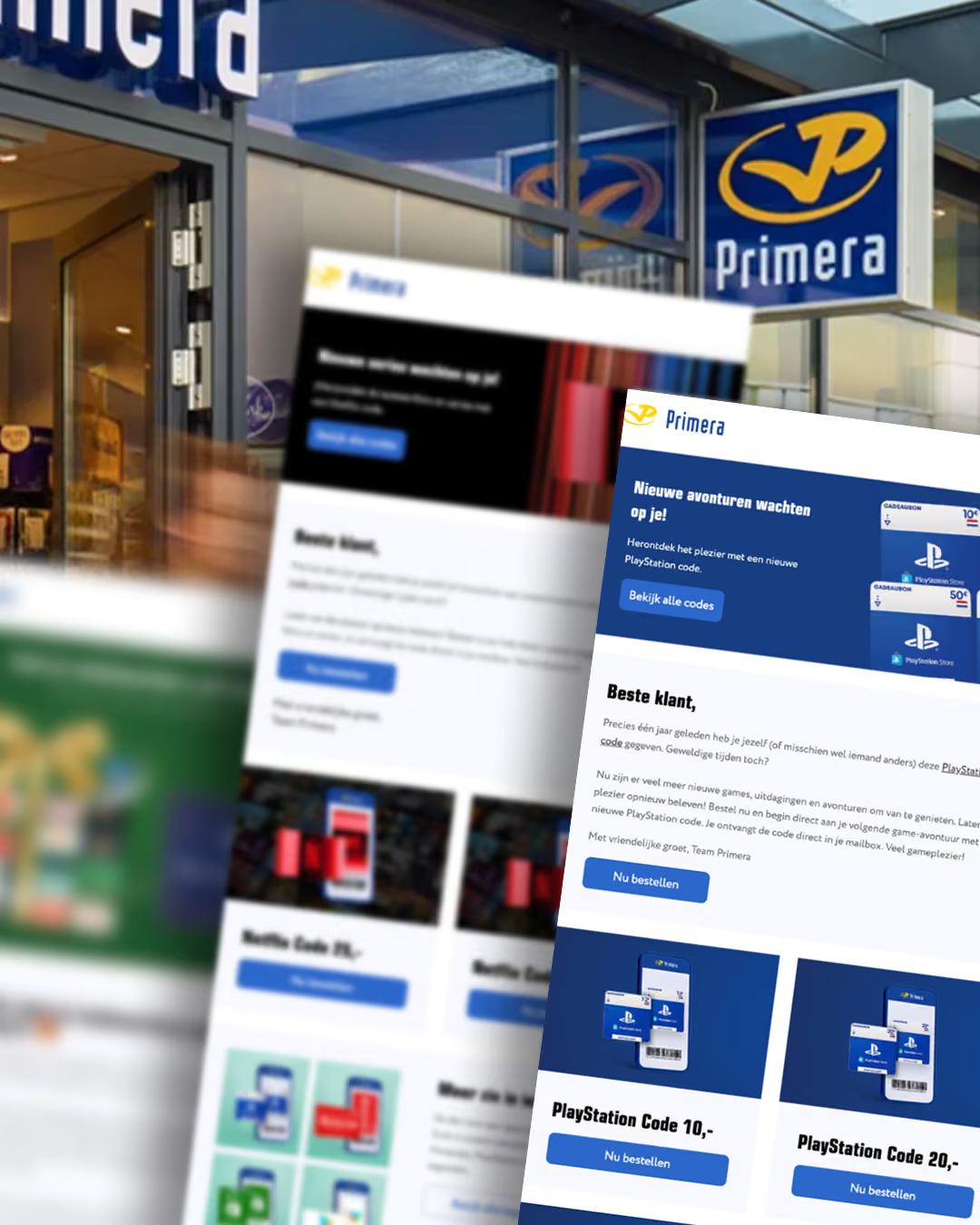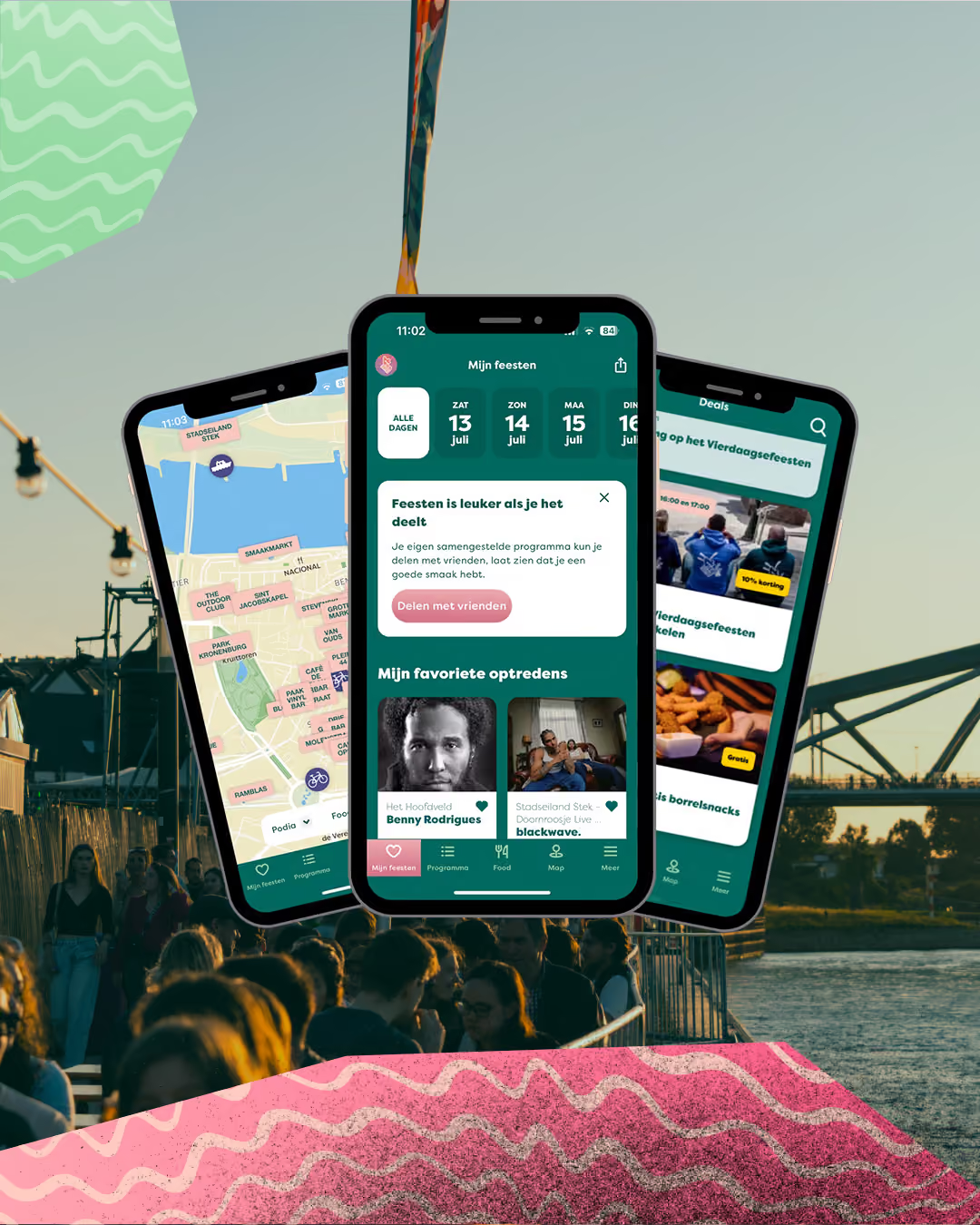



Twin Sport has a strong market position and a large customer database, but that data was trapped in disconnected systems. Behavioral and interest data was being collected in the CDP but couldn't be used to personalize ads or emails, and email clicks weren't being retargeted via advertising. As a result, many use cases remained untapped, and license costs were disproportionate to the value the tooling provided. We replaced those isolated silos with a single, unified customer view in Bloomreach and connected advertising, email, and the website to the same profile. This led to a 95% increase in revenue from marketing automation and a 29% increase from email marketing. During the same period, the webshop's revenue grew by 22.5%.
Our approach
The idea
Twin Sport wanted to extract more value from its existing digital channels and use data to drive commercial growth. The bottleneck was the foundation beneath those channels; the marketing tools were no longer aligned with the company's objectives.
Three recurring problems emerged. Behavioral data was trapped in silos, making it unusable for emails and automations. The existing tooling was too limited and cumbersome to effectively execute use cases. And the license costs were high relative to the value generated.
The strategy
As long as customer data remains fragmented, every channel operates in isolation, and most of the potential remains untapped. Personalization begins with a single profile that all channels can build upon.
The existing infrastructure was insufficient for Twin Sport to achieve its goals. Therefore, we re-evaluated the martech stack. We ultimately chose a different activation platform based on four key requirements: user-friendliness, a central customer view with genuine personalization capabilities, profile building and segmentation, and strong, reliable integrations. Around this, we built an integrated approach covering the entire funnel: advertising for awareness, landing pages for interest, automations for consideration, and on-site personalization for the purchase.
The process
- Data foundation established. A single 360-degree customer view including profile attributes, events, viewed and purchased products, consent management, and predictions (linked to the product catalog), ensuring that email, automations, website, A/B testing, segmentation, and advertising all draw from the same source.
- Basic triggers built. From a cookie-based visitor to a recognized profile: an incentive in the form of a discount code, followed by an automated email displaying personalized recommendations. Result: 9.4% database growth in four months.
- Website behavior stored at the profile level. Every page view, product view, and shopping cart update is logged as an event on the profile, including category, brand, and price. This makes behavior usable as interest data.
- Multichannel automation implemented. A visitor who arrives via a Meta ad for sneakers but doesn't purchase is automatically followed up: an email with personalized recommendations based on what they viewed, an incentive to convert, and retargeting via ads—all triggered from the same profile.
- On-site recommendations added. Upsell and cross-sell on the product page, powered by the profile and catalog rather than a generic bestseller list.
- Database cleaned with advanced workflows. Inactive contacts lower engagement and cost money. We built an automated re-engagement flow for customers at risk of churning; those who remained inactive were removed from our mailing list. The active email segment became 37.8% smaller, making it cleaner, more cost-effective, and higher-performing.

Resultaten door onze experts